
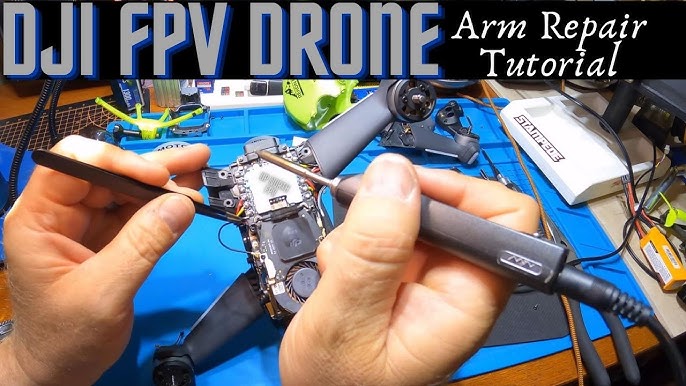
How to Repair a Damaged FPV Drone Frame: From Cracks to Complete Arm Replacement
Crashes are an inevitable part of the FPV hobby. A broken frame doesn't have to mean a hefty replacement bill or weeks of downtime. With the right tools and techniques, you can often repair your frame, restoring its strength and getting you back in the air quickly. This guide covers everything from fixing hairline cracks to performing a full carbon fiber arm replacement.
Before You Start: Assessment and Safety
First, assess the damage. Is it a clean break, a crack, or a shattered piece? Is the damage on a critical stress point like an arm base or camera mount? Minor cracks on non-critical areas are prime for repair, while severe damage near motor mounts often warrants replacement.
Safety Warning: Carbon fiber dust is hazardous. Always wear a proper respirator mask (N95 or better) and safety glasses when sanding, drilling, or cutting carbon fiber. Work in a well-ventilated area.
Essential Tools & Materials for Frame Repair
Gather these items before you begin:
• Adhesives: High-strength, quick-set Cyanoacrylate (CA) Glue (Super Glue) for cracks and small bonds. Two-part Epoxy Resin for major breaks and laminating.
• Reinforcement Materials: Unidirectional carbon fiber cloth strips, fiberglass cloth, or even thin metal/plastic plates.
• Basic Tools: Precision screwdrivers, hobby knife, sandpaper (various grits), rubbing alcohol.
• Advanced Tools (for replacements): Dremel tool with cutting and sanding bits, a small drill and bits, clamps or strong tape.
Repair Type 1: Fixing Cracks and Small Breaks
This method is for cracks that haven't fully separated the carbon fiber layers.
Step 1: Clean and Prepare the Area.
Disassemble the frame to access the crack. Clean the area thoroughly with isopropyl alcohol to remove dirt and grease. Use a hobby knife to gently widen the crack slightly, creating a small "V" groove for the adhesive to seep into. Lightly sand the area around the crack with fine-grit sandpaper to improve adhesion.
Step 2: Apply Adhesive.
For thin cracks, use thin CA glue. Apply a drop and let capillary action pull it deep into the crack. You can accelerate curing with a CA activator spray. For wider gaps or more stress, mix a small amount of two-part epoxy and apply it into the groove, ensuring it fills the gap completely.
Step 3: Reinforce (The Key to Strength).
A simple glue joint is often the weakest point. You must reinforce it.
• Carbon/Glass Cloth Patch: Cut a small strip of carbon fiber or fiberglass cloth. Apply a fresh layer of mixed epoxy to the repaired crack, place the cloth strip over it, and saturate it with more epoxy. Use a brush or stick to press out air bubbles.
• Screw Plate Method: For cracks near the edge of an arm, you can use a small piece of thin plastic or strong material as a backing plate. Drill small pilot holes on either side of the crack, apply epoxy to the plate, and secure it with small screws (e.g., M2). This creates a mechanical bond.
Step 4: Cure and Finish.
Let the adhesive cure completely, preferably for 24 hours for epoxy. Once hardened, you can carefully sand any rough edges or excess material flush with the frame. Clean the area again before reassembly.
Repair Type 2: Replacing a Broken Arm
When an arm is snapped cleanly off, replacement is the most reliable long-term solution.
Step 1: Source a Replacement Arm.
Check if the frame manufacturer sells individual arms. If not, you may need to purchase a spare "bottom plate" that includes arms, or salvage an arm from a completely broken frame of the same model.
Step 2: Remove the Damaged Arm.
Fully disassemble the frame. If the arm is broken but still attached by fibers, use a Dremel with a cutting wheel to carefully cut through the remaining carbon fiber at the break point. The goal is to create a clean edge where the arm meets the main body of the frame.
Step 3: Prepare the Joint.
Clean both mating surfaces—the stump on the frame and the new arm—with alcohol. Sand both surfaces with coarse-grit sandpaper to create a rough texture for maximum epoxy adhesion. Dry-fit the new arm to ensure a good match.
Step 4: Bond and Reinforce.
Mix a generous amount of two-part epoxy. Apply a thick layer to both mating surfaces. Press the new arm into place, aligning it perfectly. Wipe away excess epoxy that squeezes out.
• Critical Reinforcement: This joint must be laminated. Cut strips of carbon fiber cloth. Saturate them with epoxy and wrap them tightly around the joint from multiple angles, building up 2-3 layers. Use clamps, strong rubber bands, or tightly wrapped electrical tape to hold everything firmly in place while the epoxy cures.
Step 5: Final Assembly.
After a full 24-hour cure, remove the clamps/tape. The joint will be very strong. Use the Dremel and sandpaper to carefully trim and shape any excess laminated carbon fiber that blocks screw holes or disrupts the frame's lines. Drill out any screw holes that have been filled with epoxy. Reassemble your entire drone.
Repair Type 3: Fixing Threaded Holes (Stripped Screws)
A common issue is stripped threads in carbon fiber or aluminum standoffs.
Solution 1: Epoxy and Re-thread.
Clean the hole with alcohol. Fill the hole with thick epoxy or a specialty product like "JB Weld." Before it fully sets, gently screw the correct size screw into the hole. Once cured, unscrew it. You have now created new, hardened threads.
Solution 2: Helicoil/Threaded Insert (Permanent).
For a professional fix, use a threaded insert. Drill out the stripped hole to the specified size for the insert. Use a soldering iron to heat the brass insert and press it into the drilled hole in the plastic standoff. The melted plastic will cool and lock it in place. For carbon, you may need to bond it with epoxy.
Solution 3: Longer Screw & Nut.
If space allows, use a longer screw that can pass completely through the stripped hole and secure it with a small locknut on the other side.
Prevention and Maintenance Tips
• Use Nylon Screws: Consider using nylon screws for motor mounts and arm attachments. They are designed to shear off in a major crash, potentially saving your arms and motors from more severe damage.
• Regular Inspections: After hard crashes, closely inspect your frame for hidden cracks, especially around stress points.
• Strategic Padding: Use battery pads and conformal electronics mounting to absorb impact energy.
Conclusion: Empower Yourself to Repair
Learning to repair your FPV drone frame is a core skill that saves money and reduces downtime. For minor damage, a careful crack repair with CA glue and carbon reinforcement can be surprisingly durable. For complete breaks, a proper arm replacement with epoxy lamination is as strong as new. Always prioritize safety when working with materials, and don't be afraid to attempt a repair—it’s a rewarding part of the DIY FPV journey. With these techniques, you can ensure your trusty frame sees many more flights.


{{ commentCount }} Comments