
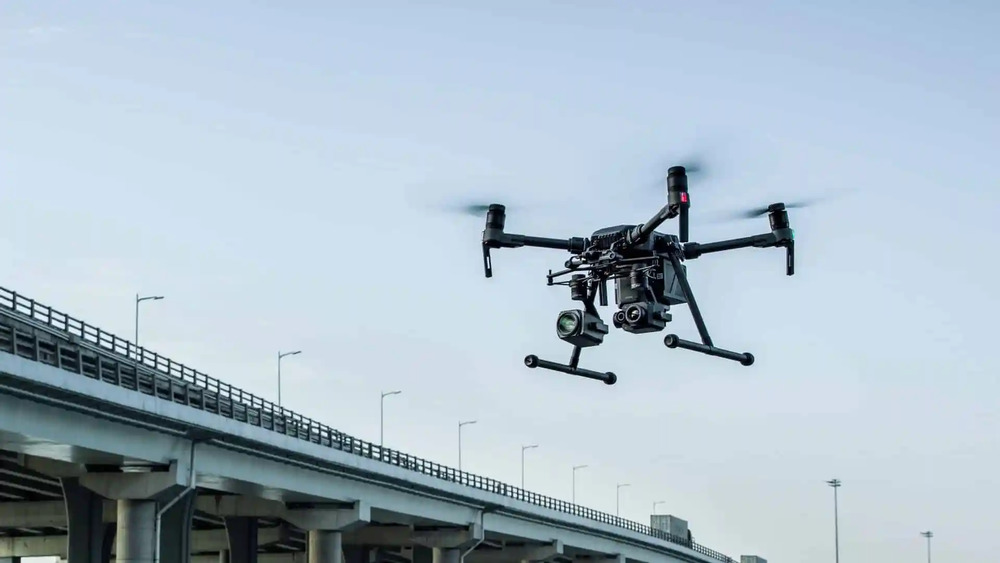
FPV Drone Bridge Inspection: The Ultimate Guide to Next-Generation Infrastructure Monitoring
Bridge inspection is undergoing a revolutionary transformation, and at the forefront of this change are FPV (First Person View) drone systems. These agile, high-precision tools are redefining how we monitor and maintain critical infrastructure, offering unprecedented access, efficiency, and data quality that traditional methods simply cannot match.
Why FPV Drones Are Revolutionizing Bridge Inspections
Traditional bridge inspection methods often involve significant challenges, including traffic disruptions, safety risks for personnel, limited access to certain areas, and high costs associated with specialized equipment like bridge inspection vehicles. These conventional approaches typically average 2-4 hours per inspection and expose workers to potentially hazardous conditions.
FPV drone technology shatters these limitations by providing:
• Unprecedented maneuverability: Unlike standard commercial drones, FPV systems offer superior agility, capable of flying through tight spaces and complex structures with precision.
• Real-time high-definition visualization: Operators can see exactly what the drone sees, enabling immediate assessment and targeted data collection.
• Enhanced safety: By keeping inspection teams safely on the ground while accessing difficult-to-reach areas, FPV drones significantly reduce workplace risks.
• Cost efficiency: One analysis demonstrated substantial savings, with drone inspections costing approximately 95,000 for traditional外包 services.
Technical Superiority of FPV Bridge Inspection Solutions
Advanced Positioning and Navigation
FPV drones excel in one of the most challenging aspects of bridge inspection: maintaining stable positioning in GPS-denied environments such as under bridges and around dense structures. Through the integration of inertial navigation systems and visual positioning technology, these drones achieve remarkable positioning accuracy down to 15 centimeters even without GPS signals. This capability ensures consistent data collection quality regardless of signal availability.
High-Precision Data Collection
Modern FPV inspection drones carry sophisticated payloads including:
• High-resolution cameras capable of capturing images with a ground resolution of 0.1mm
• 10x optical zoom lenses for detailed remote assessment of specific areas
• Laser rangefinders for precise distance measurement
• Specialized lighting systems to illuminate shadowed areas beneath bridges
This equipment combination enables the detection of cracks as fine as 0.2 millimeters, exceeding the capabilities of human visual inspection in many scenarios.
Intelligent Flight Control and Obstacle Avoidance
Today's advanced FPV systems feature 720° omnidirectional obstacle avoidance and robust anti-interference capabilities, maintaining stable operation even in complex electromagnetic environments near bridges. With transmission distances extending up to 15 kilometers and flight times reaching 42 minutes, these drones can comprehensively inspect even the largest bridge structures in a single flight.
Practical Implementation: The FPV Inspection Workflow
Step 1: Pre-Inspection Planning and Preparation
Successful FPV bridge inspection begins with thorough preparation according to established technical standards like T/AOPA 0080-2025, which outlines comprehensive requirements for drone-based bridge inspections. This phase includes:
• Site assessment to identify potential hazards and operational challenges
• Airspace authorization and compliance with local regulations
• Development of detailed inspection plans covering specific areas of interest, flight paths, and data collection methodologies
Step 2: Automated and Manual Flight Operations
FPV bridge inspection typically combines both automated and manually piloted flights:
• Automated route planning based on preliminary 3D models of the bridge structure enables systematic coverage of large, accessible areas.
• Manual FPV piloting allows inspectors to navigate complex structural elements, including bridge cables, undersides, and support structures, leveraging the operator's real-time decision-making capabilities.
Step 3: Comprehensive Data Acquisition
The inspection focuses on capturing detailed imagery of critical structural elements:
• Bridge deck and underside: Scanning for cracks, spalling, or water damage
• Piers and abutments: Assessing structural integrity and foundation issues
• Bearings and expansion joints: Documenting wear and functionality
• Cables and suspenders: Identifying corrosion, broken strands, or protective coating damage
Research demonstrates that drone-based imaging combined with AI analysis can achieve over 90% accuracy in classifying cracks and other defects.
Step 4: Data Processing and Analysis
Advanced algorithms transform raw visual data into actionable insights:
• AI-powered defect recognition automatically identifies and categorizes anomalies
• 3D modeling creates digital twins of bridge structures for ongoing monitoring
• Quantitative measurement precisely calculates defect dimensions and severity
• Digital reporting generates comprehensive inspection documentation with visual evidence geotagged to specific structural elements
Real-World Applications and Case Studies
Case Study: T-Beam Bridge Inspection in Huizhou
In a recent project on a 420-meter simple support T-beam bridge in Huizhou's Huicheng District, an FPV drone equipped with an advanced power system completed a comprehensive inspection in just 6 hours – a task that would have taken traditional methods significantly longer. The inspection identified and precisely documented 5 cracks (the shortest measuring 8cm), 1 loose bolt, 2 instances of concrete spalling, and 2 potential bearing defects.
Long-Term Monitoring and Predictive Maintenance
Beyond one-time inspections, FPV drones enable ongoing structural health monitoring through:
• Periodic inspection cycles that track defect progression over time
• Digital maintenance records that build complete historical profiles for each bridge
• Predictive analytics that forecast maintenance needs based on trend analysis
The Future of FPV Bridge Inspection Technology
The evolution of FPV bridge inspection continues with several emerging trends:
• Integration with deep learning models for increasingly accurate defect detection and classification
• Automated charging stations enabling continuous operation for large-scale bridge networks
• Enhanced sensor packages including thermal imaging, hyperspectral cameras, and LiDAR systems
• Digital twin integration creating living virtual models of bridge structures for simulation and analysis
Conclusion: Embracing the FPV Revolution
FPV drone technology represents not just an incremental improvement but a fundamental transformation in bridge inspection methodology. By delivering superior data quality, enhanced safety, and significant cost reductions, these systems are rapidly becoming the new industry standard for infrastructure assessment.
As bridge networks worldwide continue to age – with approximately 40% of bridges in China now over 25 years old – the adoption of advanced inspection technologies becomes increasingly critical. FPV drone solutions offer the precision, efficiency, and intelligence needed to ensure the safety and longevity of these essential infrastructure assets for decades to come.
For infrastructure managers, maintenance teams, and engineering professionals, the question is no longer whether to adopt FPV inspection technology, but how quickly implementation can occur to maximize both operational benefits and public safety outcomes.


{{ commentCount }} Comments