
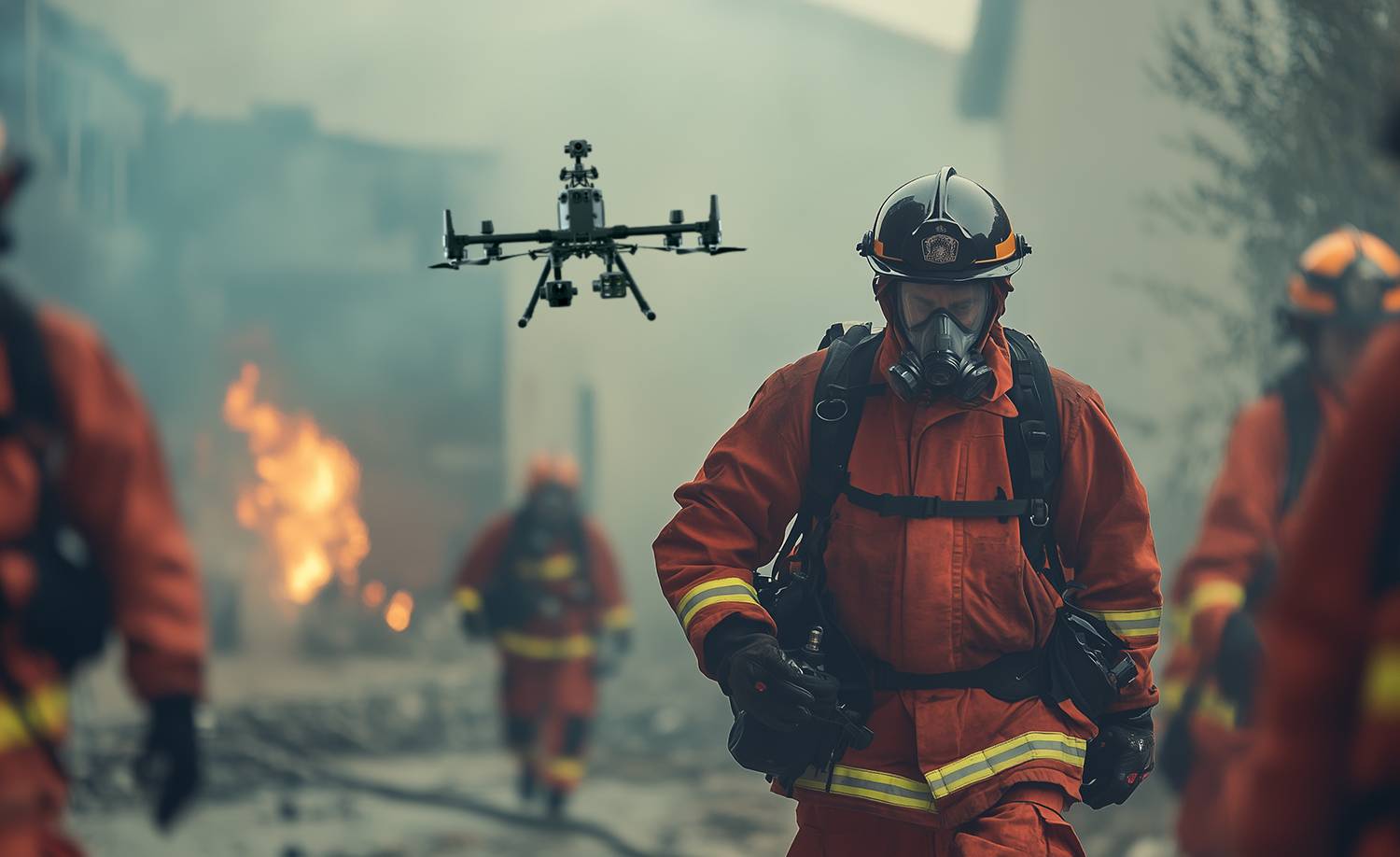
Search and Rescue FPV Drone Applications: Revolutionizing Emergency Response
First Person View (FPV) drones are dramatically transforming search and rescue operations worldwide, providing emergency response teams with unprecedented capabilities to save lives in critical situations. These agile, high-speed drones offer real-time visual access to dangerous or inaccessible areas, enabling rescuers to locate missing persons, assess disaster zones, and deliver essential supplies with remarkable efficiency. This comprehensive guide explores how FPV technology is revolutionizing search and rescue missions and why these systems have become indispensable tools for modern emergency response teams.
Why FPV Drones Are Game-Changers in Search and Rescue
Traditional search and rescue operations often face significant limitations. Ground teams can cover limited areas, helicopter operations are expensive and weather-dependent, and night operations present additional hazards. FPV drones overcome these challenges by providing immediate aerial perspectives that significantly enhance mission effectiveness.
The immersive first-person view allows operators to navigate complex environments as if they were physically present in the air. This capability is particularly valuable in time-sensitive situations where every minute counts. Rescuers can cover large areas quickly, access dangerous locations without risking human lives, and maintain continuous surveillance over areas of interest.
Modern FPV search and rescue drones combine high-speed maneuverability with advanced sensor technology. They can fly through dense forests, navigate urban disaster zones, and operate in various weather conditions that would ground traditional aircraft. The real-time video feed provides command centers with immediate situational awareness, enabling better decision-making and resource allocation.
Key Applications in Search and Rescue Operations
Missing Person Searches
FPV drones have proven incredibly effective in locating missing persons in wilderness areas, urban environments, and disaster zones. Their ability to cover large territories quickly makes them ideal for initial search phases. Equipped with high-resolution cameras and thermal imaging systems, these drones can detect human forms even in low visibility conditions or dense vegetation.
Search patterns can be programmed for systematic area coverage, ensuring no ground is left unchecked. The live video feed allows operators to identify potential clues like discarded items, disturbed vegetation, or footprints that might lead searchers to the missing individual.
Disaster Assessment and Response
Following natural disasters like earthquakes, floods, or hurricanes, FPV drones provide critical assessment capabilities. They can quickly survey damaged infrastructure, identify safe access routes for rescue teams, and locate survivors in collapsed buildings or flooded areas.
The agility of FPV systems allows them to navigate through damaged structures where traditional drones might struggle. Operators can fly through broken windows, navigate between collapsed walls, and inspect unstable structures without endangering human rescuers.
Mountain and Wilderness Rescue
In mountainous terrain where helicopter access may be limited by weather or topography, FPV drones offer a viable alternative for locating stranded hikers or climbers. Their ability to fly at various altitudes and navigate complex terrain features makes them ideal for mountain rescue operations.
Specialized FPV drones can carry emergency supplies like medical kits, warm clothing, or communication devices to stranded individuals while rescue teams mobilize. The real-time video helps assess the condition of stranded persons and plan the safest extraction route.
Water Rescue Operations
For water-based emergencies, waterproof FPV drones can search large bodies of water more efficiently than boats or swimmers. They can spot people in distress, assess water currents, and even deploy flotation devices while rescue teams are en route.
Thermal cameras make these systems particularly effective for night water rescues or in conditions with poor visibility. The drone's perspective from above often reveals patterns and movements invisible from water level.
Essential FPV Drone Features for Search and Rescue
Thermal Imaging Capabilities
Thermal cameras represent one of the most important technological advancements for search and rescue drones. These sensors detect heat signatures, making it possible to locate people in complete darkness, through smoke, or hidden by vegetation. Modern thermal systems can distinguish between human body heat and animal or environmental heat sources.
Long-Range Communication Systems
Reliable video transmission over long distances is crucial for effective search operations. FPV systems designed for search and rescue typically feature robust communication systems that maintain stable video links over several kilometers. Redundant systems and frequency diversity help prevent signal loss in challenging environments.
Extended Flight Time
Search operations often require extended airtime to cover large areas thoroughly. Professional FPV search and rescue drones feature optimized power systems that provide flight times of 30-45 minutes, with quick-swap battery systems enabling continuous operation. Some systems offer hybrid power options or tethering capabilities for extended missions.
Payload Capacity
The ability to carry additional equipment significantly expands a drone's rescue capabilities. Essential payloads include medical supplies, emergency communication devices, flotation equipment, or specialized sensors. Robust FPV platforms can typically carry payloads of 1-3 kilograms while maintaining stable flight characteristics.
Weather Resistance
Search and rescue operations don't always happen in ideal weather conditions. Professional FPV systems feature weather-resistant construction that allows operation in light rain, snow, or moderate winds. Sealed electronics, waterproofing, and temperature-resistant components ensure reliability when needed most.
Operational Best Practices for Rescue Teams
Pre-Mission Planning
Successful drone operations begin with thorough planning. Teams should identify search areas based on last known positions, terrain analysis, and behavioral patterns. Mission planners should establish communication protocols, define search patterns, and identify potential hazards in the operational area.
Flight paths should be optimized for maximum coverage while considering factors like wind patterns, sun position (for camera effectiveness), and no-fly zones. Backup plans should account for changing weather conditions or unexpected obstacles.
Team Coordination and Communication
Effective search and rescue operations require seamless coordination between drone operators and ground teams. Clear communication protocols ensure that information flows efficiently from the drone operator to incident commanders and field personnel.
Visual observers can extend the operational awareness of the drone pilot, watching for air traffic obstacles or providing additional perspective on the search area. Regular position updates and finding reports help coordinate the overall search strategy.
Data Management and Analysis
The video footage and sensor data collected during search operations represent valuable intelligence that should be properly managed and analyzed. Recording all flight footage allows for post-mission review and might reveal details missed during real-time operation.
Some advanced systems incorporate artificial intelligence to analyze video feeds automatically, flagging potential points of interest for operator review. This technology can significantly reduce operator fatigue during extended searches.
Real-World Success Stories
Wilderness Rescue in Mountainous Terrain
In the Colorado Rockies, an FPV drone team located a missing hiver in just two hours—a search that might have taken ground teams days. The drone's thermal camera detected the individual's heat signature through dense pine forest after nightfall, enabling a precise helicopter extraction at first light.
Urban Disaster Response
Following a major earthquake in Turkey, FPV drones navigated collapsed buildings to locate survivors trapped in air pockets. Their small size and maneuverability allowed them to access spaces too dangerous for human rescuers, leading to multiple successful rescues in the critical first 48 hours.
Flood Rescue Operations
During widespread flooding in Southeast Asia, FPV drones equipped with flotation devices located and assisted stranded residents before boat teams could reach them. The aerial perspective helped identify safe navigation routes through submerged areas, preventing additional casualties.
Training and Certification Requirements
Effective search and rescue drone operation requires specialized training beyond basic piloting skills. Operators need expertise in search patterns, emergency procedures, and mission-specific equipment operation. Many regions offer certification programs specifically for public safety drone operations.
Training should cover both technical skills and operational protocols. Technical training includes advanced flight maneuvers, emergency procedures, and equipment maintenance. Operational training focuses on search techniques, incident command system integration, and inter-agency coordination.
Regular practice sessions maintain proficiency and allow teams to develop and refine standard operating procedures. Scenario-based training prepares operators for the high-stress environments they'll encounter during actual emergencies.


{{ commentCount }} Comments